



Natural capital investment manager Rebalance Earth has invested several million pounds to fully fund and accelerate the restoration of 607 hectares at Broughton Sanctuary, near Skipton on the edge of the Yorkshire Dales, in one of England’s most ambitious privately financed nature recovery projects.
West Yorkshire Pension Fund-backed Rebalance Earth said the project is the first site in the UK to be registered as an environmental account under the Accounting for Nature Standard.
Rebalance Earth said all ecological recovery is independently measured and verified by nature fintech CreditNature, working alongside ecological design firm Ecosulis and the Broughton estate.
Broughton’s ecological condition was baselined at 23 out of 100 in December 2025, using CreditNature’s accredited Ecosystem Condition Index, and is forecast to reach 47 over the first 10-year phase of restoration. This is expected to generate approximately 150,000 nature credits, while tree cover across the estate rises from around 6% to over 20%.
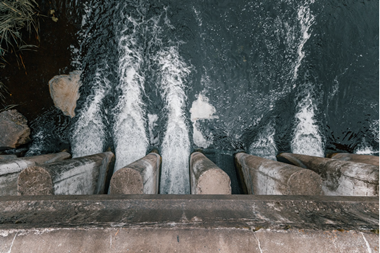
Rebalance Earth said that, alongside habitat recovery, wetland creation and leaky dams are slowing water run-off to support natural flood mitigation for downstream communities, including the city of Leeds.
Credits are issued only after recovery has been independently measured and certified, giving corporate buyers evidence that feeds directly into disclosure under the Taskforce on Nature-related Financial Disclosures (TNFD) and the EU Corporate Sustainability Reporting Directive (CSRD).
Rebalance Earth’s capital will bring greater to scale an established, seven-year rewilding programme already under way at Broughton, which has included the reintroduction of beavers, the management of invasive species and the use of hardy grazing animals such as pigs and cattle to restore natural ecological processes and diversify soil and vegetation.
James Hurrell, head of investments at Rebalance Earth, said: “Broughton shows exactly why nature should be treated as essential infrastructure. This is not about protecting isolated pockets of land, it is about restoration at a landscape scale, so habitats can deliver measurable benefits for biodiversity, water, carbon and communities.
“Private capital has a vital role to play, but only where projects are properly designed, monitored and independently verified. Broughton brings together a long-term landowner, credible ecological design and independent verification, which is the model needed if nature restoration is going to scale.”
Kelly Hollick, nature recovery lead at Broughton Sanctuary, said: “Broughton has been in the Tempest family for nearly 1,000 years, and every generation has had a responsibility to care for this landscape for those who come next. This investment, together with the monitoring and verification provided by CreditNature, allows us to accelerate that change across a much larger area, and to show how long-term stewardship, private investment and nature recovery can come together to create thriving landscapes for wildlife, people and future generations.”
Cain Blythe, CEO of CreditNature, said: “Nature recovery has long been held back – not by a shortage of ambition but by a shortage of infrastructure to make it investable. Broughton is what that infrastructure looks like in practice. By measuring ecological change against a baseline and independently verifying the outcomes, we are giving buyers of nature credits clear evidence of what is happening on the ground.”
Rebalance Earth said the investment comes as landowners, investors and companies look for credible models to finance nature recovery at scale, at a point where public funding alone cannot meet the UK’s nature and climate challenges.
The manager added: “Each Broughton partner is accountable for a distinct link in the chain: the estate provides the land and long-term stewardship, Ecosulis leads ecological design and data, CreditNature measures and certifies recovery independently, and Rebalance Earth commits the working capital as primary investment partner. That separation of measurement from delivery is designed to give the outcomes their credibility, and to enable the model to be repeated across other landscapes.”
To read the latest IPE Real Assets magazine click here.