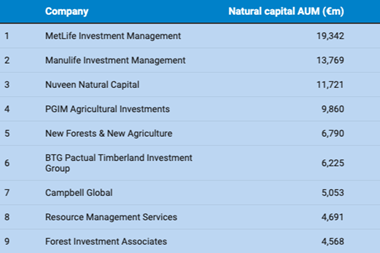


Global natural asset manager New Forests has launched its inaugural global strategy, a 10-year vehicle targeting $750m (€648m) to invest across five key regions.
The Global Landscape Opportunities (GLIO) fund joins the manager’s existing regional vehicles, which invest across the US, Latin America, Asia, Australasia, Africa and Europe.
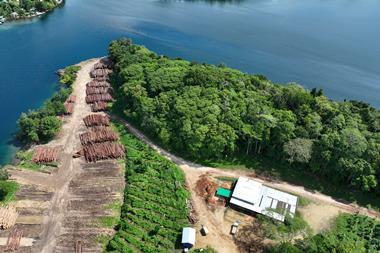
The new Luxembourg-domiciled vehicle, which targets an internal rate of return of 10% to 12%, will invest in both hard and softwood plantations, as well as a short-rotation crop geared toward supplying wood chips to Asian markets.
David Shelton, global head of investments, New Forests, said: “We already have a global exposure and global capability with assets under management in all these regions where we operate.”
Shelton told IPE Real Assets: “There will be no conflicts with regional funds due to natural opportunity queuing and mandate allocations; strong pipeline for quick deployment upon capital inflow.”
He said over the years, investors had repeatedly asked if it was possible to invest in a global, rather than a regional fund.
These were typically small- to medium-sized institutional investors that control large pools of capital but lack the in-house capability to assess individual regions themselves.
“Our typical client pool has been the globally significant large institutional clients who have the ability to make in-house regional asset allocations to where they wish to invest whether it is Australia, the US or Africa.”
Shelton expects the investor profile of the new vehicle would shift towards more medium-to-large global clients (60-70% European, 20-30% North American), with early movers already undertaking due diligence on GLIO.
Mark Rogers, CEO, New Forests, said: “The launch of our Global Landscape Opportunities strategy marks a significant step in the evolution of New Forests as a global natural capital investment manager.
“We are seeing strong investor demand for scalable, institutional strategies that provide diversified exposure to natural capital. This strategy responds directly to that need - bringing together our global platform, investment expertise, and track record into a single, offering.”
Rogers added that natural capital was increasingly recognised as a core component of resilient portfolios, offering the potential for long-term returns while supporting critical outcomes such as climate stability, biodiversity and sustainable land use.
To read the latest IPE Real Assets magazine click here.