



In a world fraught with geopolitical upheaval and deglobalisation, where international rules and norms are being tested, Europe is being cast by some investors as a ‘safe haven’ due to perceived regulatory stability, transparency and established institutions.
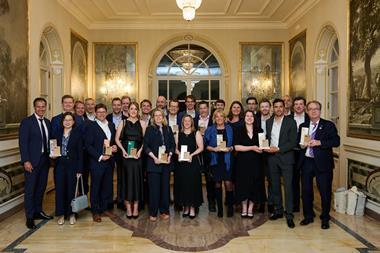
But at the IPE Real Estate Global Conference & Awards 2026 in Rome on Thursday, some institutional investors and fund managers questioned whether pivoting to Europe alone provides the best answer in an uncertain world, particularly against the stronger economic growth of the US and the selective opportunities emerging across Asia-Pacific.
Against Europe’s rules-based stability and promising opportunities in some sectors, speakers debated whether investors risked overlooking more compelling opportunities elsewhere.
Nevertheless, Keiran Farrelly, global CIO and head of real estate solutions at Schroders Capital, said Europe still offered “interesting structural growth opportunities” in sectors facing chronic undersupply.
He pointed to sectors including data centres, care homes, self-storage and logistics warehouses, where constrained supply, rising construction costs and growing rental values could support long-term investment returns.

Farrelly said repricing and rebasing had already taken place across parts of European real estate. “We can all debate whether we’re at the bottom or not in different parts of the market, but I suspect we’re going to be bumping along that bottom for a little while longer than we perhaps would have assumed this time, certainly at the start of this year,” he said.
Mathieu Elshout, senior portfolio manager at Aware Super, said the Australian pension fund had materially increased its exposure to Europe. “Over the five-year period, we’ve grown from zero exposure to Europe to now 20% in our global real estate portfolio,” he said, adding emphatically: “We like Europe.”
Yet, not everyone shared this optimism. Aldo Mazzocco, CEO of Generali Real Estate, described fragmentation as Europe’s “worst enemy”, arguing that inconsistent tax systems and regulations across jurisdictions weakened the region’s competitiveness.
He characterised Europe as “an old lady” facing weak economic growth and difficult demographics. “You don’t lose money because you have scarcity of product, complexity of new developments and so on – but if you are a developer or private equity, probably it’s not the best place to play.”
But some speakers pointed out that US real estate was still attracting global capital, regardless of negative views on its politics at home and abroad – including the conflict in the Middle East, which has triggered an energy crisis that threaten to tip the global economy into a recession.
Greg MacKinnon, director of research at the Pension Real Estate Association, said survey data showed most European investors were looking to deploy capital outside Europe, particularly into North America and Asia-Pacific. North American investors, meanwhile, continued to favour domestic allocations.
MacKinnon said the US remained attractive because of its resilient economy and status as the world’s largest and most liquid real estate market. Lower currency hedging costs have also encouraged Japanese and Korean investors to increase exposure to US property.

While geopolitical tensions had influenced investment decisions and Canadian investment into the US had halved – because of political headline risk – significantly capital was still moving into the market, he said. For many investors, the attraction lay in US fundamentals rather than politics.
Josh Pristaw, president of Clarion Partners, told a panel discussion that the correction in US real estate had already occurred, with prices in many sectors down 20% to 30%, creating an attractive entry point.
He said historical measures including vacancy rates, construction starts and deliveries were materially better than long-term averages across most sectors, apart from some parts of office and life sciences.
In Clarion’s own portfolio – which includes US$42bn (€36bn) of industrial assets – the first quarter marked the strongest leasing period in the firm’s history, with around 8m square feet of new leases signed globally.
Pristaw said occupiers were increasingly looking past geopolitical uncertainty and instead focusing on business operations and consumer demand.
Some investors spoke of their experience of benefitting from the potential of Asia-Pacific, noting, however, that the region had yet to attract a broad thematic allocation and more as a region requiring highly selective execution.
Speakers cautioned against generalising sectors across such a diverse region, arguing that opportunities depended heavily on specific cities, asset quality and local demand dynamics.
Tokyo was cited as an example of a market where office and residential fundamentals remain robust, supported by low vacancies, wage growth, inflation and shorter commuting patterns that continue to support office attendance. By contrast, logistics performance has varied sharply across cities and sub-markets.
Across regions, panellists broadly agreed that real estate returns over the next few years were likely to be driven less by cap-rate compression and more by income and rental growth.
That is increasingly directing investors toward sectors backed by long-term structural and demographic trends, including senior living, healthcare, affordable housing, logistics and digital infrastructure, while reinforcing the value of diversified portfolios in a volatile environment.
To read the latest IPE Real Assets magazine click here.