



Institutional appetite for investing in nature is growing, but more returns-based evidence is needed for investors to scale up allocations. Lauren Mills reports
Nature risk is investment risk. But it is also an investment opportunity. This is why, experts argue, it is imperative that asset owners learn how to scale nature as an asset class – now.
The situation is mission-critical. In January this year, the UK government released a document compiled by Britain’s Joint Intelligence Committee, the body that oversees MI5, MI6 and GCHQ. It is a report that should send shivers up the spine of every asset owner, investor and average person in the street.
The paper, ‘Nature security assessment on global biodiversity loss, ecosystem collapse and national security’, says, starkly, that “global biodiversity loss and the collapse of critical ecosystems could affect the UK’s resilience, security and prosperity”.
It goes further, stating that nature “is a foundation of national security”.
Rob Gardner, founder and CEO of Rebalance Earth, says: “The Joint Intelligence Committee assessed biodiversity loss as a national security threat on a par with war.” He adds: “They released only a redacted summary. The full version was suppressed for being too alarming. That tells you where we are.”
The impacts of global biodiversity loss, according to the UK government report, could range from crop failures, intensified natural disasters and infectious disease outbreaks to conflict within and between states, political instability and erosion of global economic prosperity.
Gardner continues: “The opportunity for government is twofold: get the narrative right, explain to people why this matters and then enable it, so that pension fund capital and bank capital can genuinely step in and say, we want to fund this.”
The Natural Capital Report 2026, a study from Mallowstreet, backed by Foresight, Rebalance Earth and BNP Paribas Asset Management, published in January this year, revealed that the market is approaching “a critical inflection point”, with institutional asset owners agreeing that investment in natural capital “makes long-term economic sense” but that many respondents need to see more proof of return delivery before they “strongly agree”.
The Mallowstreet research found that many institutional investors are planning first allocations, while existing investors expect to scale up over the next five years. However, conviction weakens when the focus shifts from environmental logic to economic delivery.
“Natural capital is still viewed through a traditional real-asset lens, with greater association with familiar or legacy themes such as forestry, land use and infrastructure, and returns driven by goods production and cashflows rather than restoration outcomes alone,” the Mallowstreet study found.
To move capital, the economic story needs to be strengthened and evidenced.
Paul Young, CEO and co-founder of Conservation Resources, says asset owners, investors and managers must view nature “as the primordial antecedent infrastructure”.
Young says: “Without this infrastructure functioning well, meaning healthily and resiliently, no other infrastructure in the long-term will matter.

“Do not think of forestland and farmland investing as ‘natural capital’ but think of it as infrastructure that is valuable and has multitudes of cash flow opportunities”
“So do not think of forestland and farmland investing as ‘natural capital’ but think of it as infrastructure that is valuable and has multitudes of cashflow opportunities, and that those cashflow opportunities are greatest when you have a healthy, well-functioning ecosystem running.”
Farmer-led restoration project
Gardner points to the Evenlode Landscape Recovery (ELR) project in England as a blueprint that could be replicated globally. In total, more than 3,000 hectares of habitat in Oxfordshire, Gloucestershire and Warwickshire will be restored by a group of more than 50 farmers over a period of 20 years.
ELR is the UK’s largest farmer-led nature recovery scheme, where farmers get paid for changing the way they manage parts of their land as part of a £100m funding package secured with Natural England and the government. This includes the creation of new woodland, meadows and wetlands on less productive land that regularly experiences flooding or drought.
Scottish & Southern Energy, Network Rail and Oxfordshire County Council have joined forces with the North East Cotswold Farmer Cluster to invest in landscape-scale, natural flood management through the Evenlode recovery project.
The partnership aims to help protect the local energy infrastructure, rail lines, bridges and roads in the Cotswolds from growing flood risk, reducing disruption to the public by avoiding power cuts, cancelled trains and closed roads.
Infrastructure organisations traditionally rely on hard engineering solutions such as embankments, drainage works and pumping systems to protect assets from flooding. Now, in response to increasingly extreme weather events, ELR demonstrates how private and public bodies can invest in nature to reduce long-term climate risks – by investing in the landscape itself, supporting farmers to restore habitats that naturally slow, store and absorb water across the River Evenlode catchment.
Gardner says making nature an investable asset class “to really accelerate the restoration of nature” is in everyone’s self-interest – including pension funds and other institutional investors.
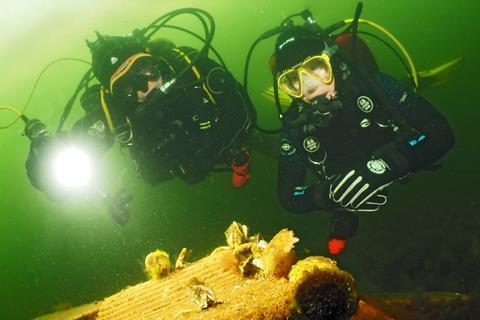
West Yorkshire Pension Fund-backed Rebalance Earth, a UK-based asset manager pioneering investment in “nature as infrastructure”, launched a partnership with marine restoration company Oyster Heaven in 2025 to invest in the restoration of Europe’s largest oyster reefs.
Rebalance Earth and Oyster Heaven jointly said they are “building a blueprint for how finance and ecological innovation can work hand-in-hand to accelerate the transition to a resilient, nature-positive economy”. The project involves the deployment of four million oysters that will form two living reefs capable of cleaning 800m litres of water a day.
Gardner says: “These two oyster reefs are basically the coral reefs of the North Sea, so they underpin marine biodiversity, which is exceptionally valuable to some companies. They provide amazing coastal defences, much better and cheaper than building giant cement walls. They will remain there as living infrastructure, continuing to grow and expand and clean more water, restore more marine biodiversity and protect more coastline.”
The reason this makes sense as a standalone nature asset, Gardner says, is that “the beneficiaries of a healthy ecosystem pay directly for the outcome, via a contract a bit like a power purchasing agreement”. He adds that Rebalance Earth has more than 20 further opportunities across the UK coastline with water utilities and house builders – “and that’s just oyster reefs”.
Prerequisites for investors
Gardner says several things need to happen to push asset allocators and asset owners into understanding that nature is critical infrastructure rather than a nice-to-have. “It needs to deliver an attractive financial return for the risk. Governments can be an enabler for this by setting up a contract for difference, being a first off-taker to crowd in others,” he says. “The second thing that is compelling is that it is truly uncorrelated from US equities, from any equities. It offers an uncorrelated return stream.
“The third thing that I think is interesting is the portfolio reflexivity [it] offers. If you’re a universal asset owner, you can’t diversify away from big systemic risks [caused by flooding or land degradation], so if you lend money to the railway operators, if you have equity in the water utilities, in the supermarkets, you are exposed to these risks.”
He continues: “So, if you can invest in [nature as infrastructure], that offers a concept called reflexivity, like a safe-haven effect.”
Conservation Resources’ Young agrees that portfolio resilience is a vital factor to consider. “By investing in practices that nurture both above and below ground biodiversity, we can create forest systems that are productive and ecologically sustainable, but also potentially more desirable and economically valuable to the market.
“We believe that using regenerative practices, we can through natural means, effect healthier and more productive forestlands by focusing on soil health and biodiversity. As a result, climate change-related extreme weather events may present fewer risks and hazards to our investments.”
He is not a big fan of concession capital being combined in nature markets, “as it immediately indicates nature is not as valuable as other assets”.
He explains: “Nature can stand on its own and until we can show that, mandatory/regulatory/concessionary movements only communicate it is not valuable and needs help.
“Again, you need to show that nature makes a better business model and the capital will follow. That said, we are not saying philanthropy and regulation are out the door. They certainly have their roles in nature too, and there needs to be a balance among the three paths. We are only saying that there needs to be a strong case for financial return by investing in nature.”
Pension scheme backing
Several investors and managers have already proved this. In January 2025, UK local government pension schemes (LGPS) East Riding and West Yorkshire doubled their investment in Foresight Group’s natural-capital strategy to enable the fund to explore further opportunities in the sector.
The LGPS duo have committed an additional £27m (€25.7m) to Foresight Natural Capital (FNC), whose existing portfolio is largely comprised of afforestation projects and established forestry assets.
The latest capital will enable FNC to pursue additional natural-capital opportunities such as biodiversity net gain, peatland restoration and regenerative agriculture.
Richard Kelly, managing director at Foresight Group, said at the time that the science is clear, adding that “there is no credible pathway to avoiding a global climate and biodiversity catastrophe without nature-based solutions”.
Kelly says that, in the UK, he sees local government pension schemes and the regional pension fund pools as “key instigators for nature-based solutions”.

“We can rebuild nature, we can get companies to pay, and we can get pension funds to invest in it”
Gardner believes that the UK can be a leader in making the case for nature as a standalone asset class. “The UK is uniquely placed to be good in this space. We have a very successful environmental sector, whether that’s the National Trust, RSPB, the Rivers Trust, or the Wildlife Trust. We’ve got people with real expertise on the ecology and the nature side,” he says. “We have managers and investors who are creating blueprints that are repeatable and scalable. We can rebuild nature, we can get companies to pay, and we can get pension funds to invest in it.”
* This article has been updated to remove an incorrect reference to a company’s fish sourcing activities
Natural interest
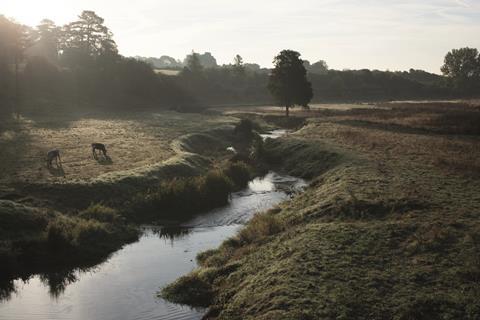
Restoration blueprint: Under the Evenlode Landscape Recovery (ELR) project in England, a group of more than 50 farmers will aim to restore more than 3,000 hectares of natural habitat in Oxfordshire, Gloucestershire and Warwickshire over a period of 20 years. (Photo: Ben Molyneux, Dreamstime)
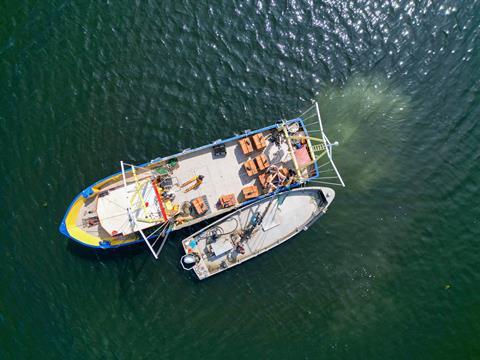
 Rebalance Earth, a UK-based asset manager pioneering investment in “nature as infrastructure” and backed by West Yorkshire Pension Fund, launched a partnership with marine restoration company Oyster Heaven in 2025 to invest in the restoration of Europe’s largest oyster reefs. (Photos: Rebalance Earth / Oyster Heaven)
79%
of UK institutional investors say natural capital makes long-term economic sense
57%
of all UK asset owners invest in natural capital already
41%
of non-investors plan to make first allocations within five years
33%
of existing investors plan to allocate more than 3% in five years
Source: Natural Capital Report 2026 (based on responses from 68 UK asset owners representing over £3trn)




Special report: Climate and nature

Climate change risk and biodiversity loss are becoming increasingly intertwined
- 1
 Currently
reading
Currently
reading
The challenge of scaling nature for economic return
- 3
- 4
- 5