

Specialist carbon advisory and project delivery firm RadiusZero and digital infrastructure provider Kana Earth have teamed up to bridge the gap between on-the-ground nature projects and institutional capital requirements.
The partnership combines Kana’s digital portfolio management infrastructure with RadiusZero’s technical delivery and monitoring, reporting and verification expertise, with the aim of transforming natural capital into a portfolio-grade asset class.

RadiusZero and Kana Earth intend to help clients develop and implement projects, prepare them for certification and connect with buyers or investors with clearer progress tracking and fewer handoffs.
Natasha Rothbucher-Thomas, founder and CEO of RadiusZero, told IPE Real Assets: “Even if you’ve got great science, even if you’ve got a great team, even if you’ve got all the pieces – if you don’t have the technology and you don’t have the infrastructure to manage the process from end to end and to provide the transparency and bring together all of the different stakeholders within that value chain, there will always be problems that this partnership really aims to solve.”
She added that the focus is on “trust, transparency and integrity”, moving away from theoretical estimates towards the reality of what a project “actually is doing on the ground”.
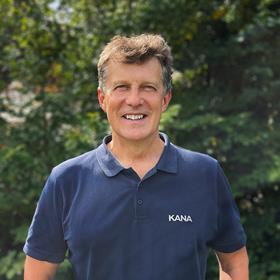
Andy Creak, co-founder and CEO of Kana Earth, told IPE Real Assets: “If you look at all of the different asset managers out there, they’ve got real asset portfolios, they’ve got infrastructure portfolios, they’ve got some IP portfolios. This new arrival is not yet investable at scale.”
Creak said the goal of the partnership is to provide the technology needed for large-scale deployment. “How do I not spend £50,000 investing into a £50,000 project in due diligence? We’re building the hub where people do projects and the seed platform for portfolio management.”
To address the lack of standardisation across different project types, Kana Earth has developed a proprietary language called NatureScript “to go and get all the different pieces of data that’s required for a certain type of project and bring it into a line item on your portfolio”, Creak said.
This allows fundamentally different assets, such as Scottish woodland or Brazilian soil carbon, to be managed with a consistent risk profile and return view. “We have to have that ability for everything to look like a line on a portfolio, even if they’re fundamentally different processes,” Creak added.
The partnership also aims to mitigate execution and ‘greenwashing’ risks through high-frequency tech monitoring and oversight, Rothbucher-Thomas said, adding that the system uses IoT sensors and satellite data to measure variables like tree growth or soil moisture in real time.
“It’s not about what you expect a project to do, it’s what a project actually is doing on the ground,” she said. This data is fed directly into the platform, triggering alerts if discrepancies arise, which Rothbucher-Thomas said is “fundamental for having proper integrity projects that are actually being delivered”.
For institutional allocators, the collaboration is designed to solve the “due diligence bottleneck” that often makes smaller nature projects expensive to assess. By grouping similar projects togerther and providing a “fully auditable investment trail”, the firms intend to move natural capital from a niche 0.2% allocation to a core 3% holding within strategic asset allocations.
The partnership will initially focus on markets where RadiusZero has active delivery pipelines, with Brazil and Kenya identified as priority regions for commercial momentum.
To read the latest IPE Real Assets magazine click here.