


Climate risks are increasingly predictable but remain underpriced across real assets. Brodie Boland outlines four ways to address this
“Thales was taunted with the uselessness of philosophy; but from his knowledge of astronomy he knew there was going to be a large olive crop. So he paid deposits for all the olive-presses. And when the season arrived, there was a sudden demand, and he realized a large sum of money.” – Abridged, from Aristotle’s Politics
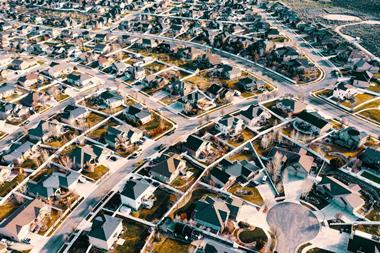
Just as in Thales’ time, people are ignoring the changing weather. While specific climate risk events are hard to predict, we know which locations and assets are at higher risk. And yet climate risks are not fully priced in. Planners expand in exposed locations. Developers build for yesterday’s flood maps, not tomorrow’s sea level. Investors allocate capital to risky markets. And families move into harm’s way.
To change this, real assets capital flows must reflect climate risks. Here’s how.
1. Improve modeling and spatial awareness
Investors often see apparently contradictory climate-risk predictions. When this happens, they understandably dismiss climate science’s relevance. Low-quality modelling is part of the problem. We must separate snake oil from good science. But even quality models sometimes say seemingly different things. These differences may be due to differences in spatial or temporal granularity, climate scenarios or how impacts are estimated. Investors need the fluency to understand and interpret these differences.
For modelling to work, we also need to know where assets are. However, asset locations are often not visible to the full capital stack. If you ask banks for the locations of assets in their loan book, they often give you the borrower’s HQ address. Each step of the capital flow – portfolio construction, parcel selection, investment choices, underwriting, lending, valuation, recapitalisation – must be location-aware.
2. Unleash price signals
Once we know the risks, pricing must follow. Insurance should be a primary signal. But because most insurers price annually, rates reflect current, not future risk. This causes dramatic rate spikes. Multi-year policies, transparent underwriting and structures such as parametric insurance that reward resilience will all be part of the solution.
Given loan durations, banks have an incentive to price in climate risks. But legacy systems impair lenders’ ability to vary debt prices based on climate risks. Valuations models should incorporate climate risks. And governments should reflect risk in land costs (for example, through zoning). Brokers and auditors must also create risk visibility between buyers and sellers.
3. Create opportunities for today’s Thales
Several years ago, I had breakfast with a dozen developers in a highly climate exposed city. They understood the severity of local climate risks. However, they kept pouring more money into new developments because they made money by doing deals, not recognising risks.
So, who makes money by recognising risks? Short sellers. Without short sellers, asset prices typically reflect the most optimistic buyer. However, it is hard to short sell real assets. Fractionalising real assets equity and improving liquidity could enable short selling based on climate risks. One could, for example, short a diversified bundle of assets in a specific location.
These investors would be unpopular, but by surfacing risks would reduce the severity of future shocks.
4. Democratise risk awareness
Some investors will suffer, but capital is mobile. It’s not so easy to move a family and create employment and community elsewhere.
While, most major investors have access to the best climate modelling, the typical homeowner does not. Available tools, such as FEMA flood maps, are inadequate. And there have been reversals in the availability of climate risk information.
To enable better decision-making – not just within the investment committees but at the kitchen table – climate-risk awareness should be a public good, accessible to and interpretable by all.
Brodie Boland is faculty affiliate at Georgetown McDonough’s Steers Center for Global Real Assets