


While Europe supports renewables collectively, individual nations are also modernising their own regulations to accelerate progress, writes Dario Bertagna
Energy has become the defining challenge of our times, not only for governments but for investors and consumers.
As geopolitics drives volatility in European energy markets, energy security has taken centre stage alongside the continent’s drive to net zero. But are these two goals compatible together?

As investors in European clean energy infrastructure since 2011, our answer is unequivocal: yes. The case for investment in reliable and secure renewable energy infrastructure locally to meet these challenges has never been stronger.
Whilst these ambitions are worthy in their own right, considerable opportunities exist for institutional investors. But as the market has evolved, so has its complexity. Generating alpha is no longer straightforward - specialisation and local solutions have become a prerequisite for success and off-the-shelf strategies simply won’t cut it.
Here, we assess why Europe’s pivot towards energy security has created favourable conditions for renewables, examine some of the innovations that will drive progress in a highly complex sector and look at how investors can capitalise on a period of change in Europe’s energy market.
Energy security has become paramount
Since the onset of the war in Ukraine, we have seen a fundamental shift in the energy landscape, with policymakers prioritising the resilience of Europe’s energy supply.
Uncertainty has compelled governments to act. Frameworks including the REPowerEU Plan and the more recent Clean Industrial Deal have been enacted at speed, with energy security positioned as a key policy pillar alongside net zero objectives.
In short, the direction of travel is clear: the dual needs of decarbonising the economy and keeping the lights on are now driving energy policy from a supranational to local level.
These policy tailwinds reinforce our high-level view that renewables, and the infrastructure that supports them, remain the best way to satisfy these goals and represent one of the biggest investment opportunities in decades to come.
Policy improvements will encourage investment
Alongside European-wide support for renewables, individual nations are taking action to improve their regulatory frameworks. Initiatives in the Nordics to move to 15-minute imbalance settlement and harmonised “single pricing” mechanisms are being watched closely by the market. Meanwhile, in Germany, the government has signalled its support for greater investment in new renewable power projects and a pivot to market-based solutions to improve the electricity grid.
While implementation risks remain, the move towards a model that rewards flexible, market-based solutions, alongside streamlined permitting processes for new projects across Europe, will help create the right conditions and encourage much-needed investment into energy infrastructure across the continent.
Electricity demand is growing
While recent electricity demand in Europe has been flat, the International Energy Agency is forecasting sizeable growth in the coming years. Unsurprisingly, AI and growing digitalisation are expected to be the main drivers, on top of the demand from technologies such as cloud computing and the wider electrification of industry and transportation. The need for more power is acute and presents opportunities at the intersection of renewable electricity generation, storage and grid flexibility.
Opportunity through innovation
Sustainable energy solutions are now a defining consideration in the development of large scale, electricity-hungry projects such as data centres. The sector is rapidly transitioning to clean, resilient, and scalable power models and we see several key strategies to capitalise on this shift.
Primarily, Power Purchase Agreements (PPA), whereby corporates or utility companies purchase energy directly from specific producers, are increasingly favoured. These arrangements offer buyers cost stability and sustainability benefits, whilst producers (and ultimately investors) gain from structured, de-risked revenue streams, flexibility and protection from market volatility.
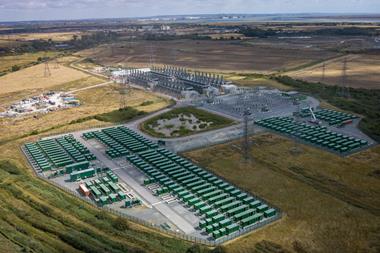
Furthermore, when combined with on-site or near-site solutions which utilise wind or solar projects with battery storage, these technologies provide clean, secure energy and a credible alternative to fossil fuel-based systems.
As the costs of renewable technologies continue to decrease, strategies such as these offer clear advantages to existing models. Our conviction is that those who prioritise sustainability will emerge as long-term leaders in the space.
The ‘easy’ part is now over
Whilst significant renewable capacity has been built in Europe, we would argue that the ‘easy’ part is now over. The European energy market is highly complex by nature and challenges around permitting, PPA structures, grid curtailment, and the growing prevalence of negative pricing require deep technical and structuring capabilities.
It is because of these complexities that we do not believe clean energy solutions will become commoditised over time, nor available ‘off the shelf’. Experience, specialisation and deep local relationships are essential.
Looking ahead, barriers to entry will continue to be high, and the quality of any investment in this space will continue to be driven by the expertise of the General Partner to deliver the most attractive risk-adjusted returns.
It’s critical that investors partner with players that can navigate the complexity of the sector and capture opportunities in a rapidly changing market.
Why now for institutional investors
The investment thesis for clean energy is grounded in long-term structural growth trends, underpinned by the twin policy imperatives of energy security and decarbonisation. As Europe accelerates its transition away from fossil fuels, renewable energy is the only solution that can fulfil Europe’s policy aims, whilst offering contracted, de-risked and cash-generating portfolios for investors.
In a world where the needs of new, energy-intensive industries need to be balanced with Europe’s climate and energy security responsibilities, more investment is required. Renewables present the best chance for Europe to provide the clean, secure and reliable energy that our economies rely on.