



Leases protect data centre income. The climate risk sits elsewhere: in the racks, in a handful of locations and in costs that arrive after the debt is repaid, writes Wahib Ghazni.
In most real estate, the building is the asset. In a data centre, it is the box the asset comes in.
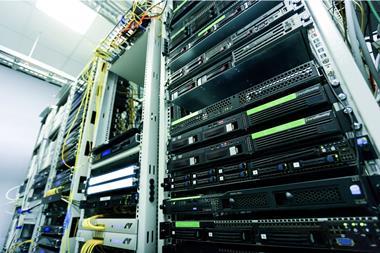
The servers, storage and GPUs inside are worth about 70% more than the building, and close to three times as much in AI facilities. They are replaced every few years, they often belong to tenants, and when floodwater gets in they account for three-quarters of the damage.
Investors, understandably, underwrite the lease. Hyperscale tenants sign for about 15 years on take-or-pay terms, and at IPE Real Assets’ Munich conference this year a senior infrastructure investor said those contracts carry no volume risk. On income, that is fair. But no lease keeps water out of a data hall. My working paper, Risk in the Racks, measures what the lease leaves out. It estimates flood, wind and wildfire losses for 14,073 operating data centres in 187 countries, holding $2.8trn of buildings and equipment, and follows them through leases, insurance and debt. Expected losses are $4.4bn a year, about 1% of revenue. The average is manageable. Where it sits is not.
First, the risk is in the racks. Equipment accounts for 61% of expected loss, so at colocation sites a landlord’s building survey can look clean while most of the exposure sits with tenants. About three-quarters of all expected loss is uninsured.
Second, the risk is diversified globally but concentrated locally. Just 141 sites, 1% of the total, carry half of expected loss. China, including Hong Kong, holds 17% of value but half of expected loss. Within a single hub, loss rates can differ tenfold between neighbourhoods a few kilometres apart. Diversified securitisation pools hold up; uninsured single-hub pools in Shanghai, São Paulo and Hong Kong breach cash-trap triggers in 4–6% of years.
Europe is comparatively benign: 10 basis points of value a year against 15.6 globally, roughly flat to 2050, and London or Frankfurt pools essentially never breach. Its long-run question is water. Under a high-emissions scenario, the share of European capacity in the two highest water-risk tiers rises from 36% to 61% by 2100. The risk is permits and supply in a drought, not the bill.
Third, the horizons do not match. Data centre ABS typically repay in about five years, over which the climate drift is negligible. On a high-emissions path, total climate cost, including extra cooling and water, rises from 1% of revenue today to 1.6% by 2050 and 3.8% by 2100. Lenders are repaid before most of it arrives. The building, with a 25–30-year life, stays, and so does its long-term owner. Capitalised, the cost is 3–4% of value, roughly 20 basis points on a 5.5% cap rate.
Fourth, the fix is affordable but the incentives are split. Raising the lowest floor of flood-exposed facilities to the 100-year flood level would cut flood losses by 42% and, in new construction, pay for itself for most of the affected value. Yet at third-party facilities the landlord who pays keeps only 22% of the benefit.
Investment committees can ask five questions. Is hazard measured site by site, with floor heights? Who owns and insures the equipment, and do policy limits cover a bad year? The most exposed single facility faces a 100-year loss above $6bn, well beyond typical limits of $1.5–3.5bn. How concentrated is the platform or pool in one hub? Do exit values reflect costs that arrive after the debt is gone? And do leases share resilience spending between landlord and tenant?
Pension and sovereign funds are the natural owners of long-lived real assets, and so of their long-lived risks. In data centres those risks are measurable, local and often avoidable, provided investors underwrite what sits inside the box as carefully as the box itself.
Wahib Ghazni is principal and head of economic and financial models at Jupiter Intelligence.
To read the latest IPE Real Assets magazine click here.