



A ‘super’ El Niño does not introduce a new category of risk but rather intensifies existing vulnerabilities
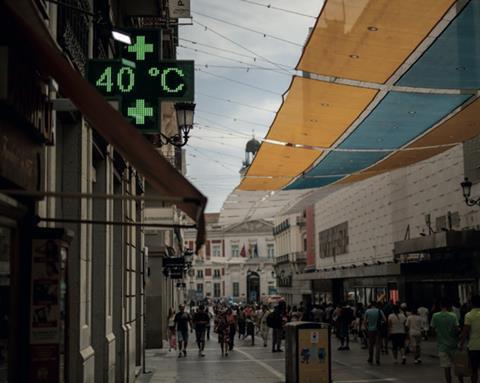
The prospect of a ‘super El Niño’ is sharpening investor attention on physical climate risk at a time when global temperatures are already amplifying the intensity of extreme weather. On 2 June, the World Meteorological Organization warned that the world should “prepare for El Niño”, highlighting elevated risks of heatwaves, droughts and heavy rainfall as ocean temperatures shift. This week, ‘red alert’ warnings have been issued across cities in Europe, including Paris and London, although these are not tied to the current El Niño effect developing in the Pacific.
While El Niño is a natural climate phenomenon not related to anthropogenic, or human-induced, climate change, its financial relevance is increasingly defined by how it interacts with a warmer baseline climate.
“Rising global temperatures significantly amplify its effects, intensifying both droughts and extreme rainfall events,” says Job Hogewoning, senior investment risk manager at PGGM, the asset manager of Dutch pension fund PFZW. “As a result, food systems are among the most exposed sectors, with cascading impacts on supply chains and infrastructure due to weather-driven disruption.”
While exposure to these dynamics is already embedded across institutional investors’ portfolios, Hogewoning says, “climate change increases both the frequency and severity of losses through interconnected physical, biodiversity and transition risks”.

For example, he continues: “Higher temperatures increase cooling demand and energy use, while drought conditions constrain water availability and can reduce hydropower generation capacity.”
Hogewoning also points to current pricing mechanisms, which he says do not adequately reflect climate risks. “In my view, climate-related risks remain insufficiently priced by markets,” he says. This is supported by analysis such as the ESA 2024 Fit for 55 climate scenario assessment, which anticipates potential market adjustments if current policy trajectories persist.
Similarly, the ECB’s Supervisory Priorities 2026–2028 highlight “material gaps”, Hogewoning says, in the pricing and coverage of climate-related risks, particularly regarding insurance protection. “A key challenge is the long latency of physical climate impacts compared with more immediate transition risks. Nonetheless, both acute and chronic physical risks appear systematically underappreciated, alongside accelerating biodiversity and nature degradation as compounding factors.”
A central challenge is determining the financial impact of climate risk at asset level, says Rémy Estran-Fraioli, CEO of Scientific Climate Ratings, an EDHEC venture. “Existing ESG and climate datasets often fail to reflect the true financial materiality of climate risk, because they dilute or misrepresent its impact,” he explains. “Climate risk is frequently assessed through qualitative indicators and then combined with social and governance factors into composite ESG scores, obscuring its direct effect on asset values, revenues and creditworthiness. This makes it difficult for investors to isolate and price climate risk accurately within portfolios.”
El Niño impacts are highly localised, he points out. “A severe El Niño event illustrates these shortcomings clearly. While El Niño is a global climate phenomenon, its financial impacts are transmitted through highly localised physical hazards, including coastal flooding in Peru and Ecuador, drought and wildfire risk in Indonesia and Australia, and associated disruption to critical systems. These include water availability, energy generation and transport infrastructure. The key investment question is therefore not whether an asset is exposed to El Niño at a broad level, but which specific assets are exposed, how vulnerable they are, and how these localised risks translate into financial losses at asset level.”
This reinforces the need for asset-level analysis, he emphasises. “Assets located in the same country, sector or even city can exhibit materially different risk profiles depending on factors such as precise location, elevation, construction quality and surrounding infrastructure. As a result, aggregate assumptions can mask significant differences in vulnerability and expected financial impact.”
Despite rising awareness, resilience remains poorly reflected in pricing, he says. “Climate resilience and adaptation remain largely invisible in current asset pricing. Markets tend to respond after extreme events occur, rather than systematically valuing investments that reduce future losses.”
Tobias Grimm, chief climate scientist at reinsurer Munich Re, gives a longer-term perspective. “Munich Re’s NatCatSERVICE has been collecting loss data from natural catastrophes worldwide and analysing them with regard to possible trends since the 1970s. It is evident in many regions and for some weather hazards in particular that losses from these events have increased in recent years, in some cases even by leaps and bounds.”
He continues: “Today the insurance industry is facing a new normal in which annual natural disaster insured losses reach, on average, the US$100bn mark, with economic losses about 2.5 times higher. The development of losses is dominated foremost by socioeconomic factors like rising real estate, building and infrastructure values, growth in the number of houses and/or commercial businesses and the increasing settlement of private and commercial property in high-hazard regions like coastal areas or along rivers. These effects first have to be deducted from observed loss trends. The remaining loss trends we see after accounting for these factors are indicators that climate change may already be contributing, at least partly, to losses.”

Operational risk specialists emphasise how these dynamics spread through corporate systems. Risto Schmid, head of climate resilience Switzerland at Zurich Resilience Solutions, notes: “The level of exposure strongly depends on the type of business. A company may be impacted at multiple points, or even along its entire value chain. In addition, even if the company itself is not directly affected, critical infrastructure such as energy supply or transportation may be disrupted, leading to secondary impacts on the company.”
He says that companies have now become used to fulfilling mandatory disclosure and reporting requirements. “However, those that do not treat this as a simple ‘tick-the-box’ exercise, but instead take a holistic view of the risk, usually go a few steps further. They analyse exposures at location level, review the controls in place and strengthen them where needed to enhance their overall resilience,” he adds.
Schmid notes that the real estate sector has focused on mitigation, but in the past six months interest has shifted more to physical climate risk – not only acute events such as floods or hailstorms, but also chronic risks like heat stress, which, due to increased cooling needs, can raise a building’s power consumption and water scarcity.
“At this stage, I am not aware of any specific discussions relating to a potential super El Niño. Summarising, it can thus be said that one needs to be prepared for several different scenarios, be it a super El Niño or otherwise,” he adds.
Taken together, these perspectives suggest that a super El Niño does not introduce a new category of risk but rather intensifies existing vulnerabilities. For real asset investors, the key challenge is increasingly how climate hazards propagate through systems, translate into asset-level losses and remain only partially reflected in current valuation frameworks.