Richard Jacobs tells Tjibbe Hoekstra about investing in regenerative agriculture

Van Lanschot Kempen IM

• Ranked 19th
• Natural capital AUM: €735m
• Forestry/timberland AUM: €42m
• Agriculture/farmland AUM: €693m

In 2021, Van Lanschot Kempen Investment Management launched the Kempen SDG Farmland Fund with €210m of seed capital from a Dutch investor, PostNL pension fund. The fund promised stable returns of 6% to 8% and a positive impact on several sustainable development goals (SDGs) by focusing on regenerative agriculture. 

The fund now has some €461m in commitments from two pension funds, three insurance firms, several family offices and high-net-worth individuals. So far, €383m has been invested in farmland.

Fund manager Richard Jacobs expects assets under management to double soon. “We expect to quickly cross the €1bn mark, as agriculture is still a very small asset class with a lot of potential for growth,” he says. “Only 1% of arable land is currently owned by investors, with 99% still held by farmers, many of whom are approaching retirement without having a successor.”

The fund invests both in land leases, buying land to rent out to farmers on long-term leases of typically 10 years, and in ‘own-and-operate’ farms. An example of the latter is a citrus fruit farm the fund recently acquired in Huelva, Spain.

“This is a farm of 1,000 hectares with orchards of citrus fruits. It is run by a general manager and 15 permanent workers who are employed by the company Covadogna, which is 100% owned by the fund, and 50 seasonal workers who are hired to help with the harvest,” explains Jacobs.

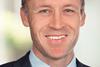
Richard Jacobs

Richard Jacobs: “only 1% of arable land is currently owned by investors, with 99% still held by farmers”

Jacobs says agriculture is “a very attractive asset class for investors who are looking for diversification, both compared to other asset classes and within the asset class itself”. While diversification within forestry investments tends to be limited by default, with most production forests only comprising a small number of tree species such as pine or acacia, crop diversification in agriculture is, in theory, boundless. 

“We currently invest in 25 different crops in nine countries on four continents,” says Jacobs. This variety in cultivated crops combined with geographical diversification should result in stable returns of 6-8% per year before management costs of 0.8%, he says. “There’s a lot that can go wrong in agriculture, from fluctuating prices and diseases to drought and storms, so diversification is a must.”  

But what makes agriculture as an asset class also appealing to investors is the possibility to make an impact. The Kempen SDG Farmland Fund aims to positively contribute to six SDGs by focusing on regenerative agriculture. Jacobs says: “Regenerative agriculture sounds a bit activist perhaps, but is fast becoming mainstream amongst farmers, in mainstream media, and even on Netflix.” The streaming company has produced several documentaries about regenerative farming.

“Regenerative farming also leads to demonstrably better results, both financially and in terms of impact, compared to conventional farming,” Jacobs says. 

Orange farm in Spain

The Kempen fund also rents out land to ‘own-and-operate’ farms, such as this orange farm in Spain

But what is it exactly? “The core of regenerative agriculture is to improve the condition of the soil, to regenerate it. We want to bring it back to the state of before the use of heavy machinery by reducing the intensity of ploughing,” explains Jacobs. “We also encourage planting non-productive crops in winter, to retain minerals and keep the soil in good condition.”

Another core element of regenerative agriculture is circularity. “We aim to use everything our farmers produce. For example, when we grow grain, we tend to throw away the chaff. That’s a pity, as this can be recycled as carbon back in the soil and the excess material can be used as bio-based material, for example in construction.” 

Circularity also means reducing the use of artificial fertilisers and instead adopting natural ways to keep the soil productive. “In Denmark, we work with a dairy farmer who made the transition to circular agriculture five years ago. He then significantly reduced the size of his herd and started to also grow vegetables,” says Jacobs.

The farmer alternates the use of his land between cattle grazing and growing vegetables. “One year, he has his cattle graze on a certain plot of land, while the next year he grows vegetables there. This way, he keeps his land fertile without having to use any external inputs,” Jacobs adds. 

The Danish farmer, who leases his land from the fund, is still an exception among the farmers Jacobs works with. “In principle, the fund focuses on crop agriculture, as I prefer to focus on what I understand best myself. Cattle farming is also much more complex; you have to take into account animal welfare standards, for example, and more difficult to manage out of the Netherlands.” 

Despite his fund’s focus on circularity and regenerative agriculture, organic farming is “not a must” for the Kempen SDG Farmland Fund. Just about 10% of the fund’s approximately 30,000 hectares are farmed organically. “We want to go organic where possible, not only for permanent crops but also for vegetables,” says Jacobs. “However, organic farming is very much demand-driven, which leads to farmers combining organic and regenerative farming and adjusting based on supermarket demand.”

Lower-margin bulk products such as soy or wheat are not often farmed organically, he adds. And yields being lower than from conventional farming is not the only downside of organic farming. “You need to remove weeds more often too. This leads to more interference with the soil which can lead to higher GHG emissions.”

Regenerative farming really is the future. “While organic farming only focuses on not using pesticides, regenerative farming is holistic and looks at the big picture. It leads to better financial results and new business models for a sector that is in need of change,” Jacobs concludes.