



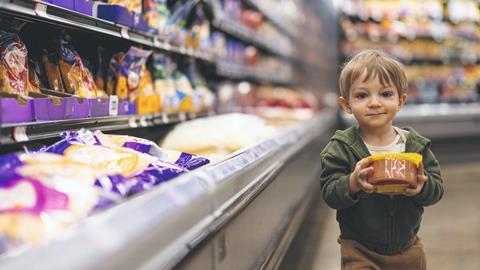
In an age when global food supplies are under threat from war, rising production costs and climate volatility, can institutional capital help strengthen food security? Florence Chong investigates
The energy crisis triggered by the outbreak of the Iran war is now spreading through the global food system. It threatens agricultural production and is expected to drive food prices higher into 2027 and potentially beyond.
The convergence of geopolitical tensions, rising production costs and extreme weather is squeezing farmers worldwide, raising questions about the resilience of global food supplies and the role institutional capital can play in strengthening agricultural production.
According to the World Bank’s September Food Security Update, cereal prices have risen 18% since June, with maize up 26% and wheat 22%, reflecting tighter production conditions and higher input costs.
The OECD expects international food commodity prices to peak in the second quarter of 2027, averaging 11% above their third-quarter 2026 level. The organisation anticipates that prolonged disruption to fertiliser supplies, aggravated by extreme weather, could push prices higher and reduce agricultural output in vulnerable economies.
The disruption is particularly acute in the fertiliser supply chain. According to the Washington-based International Food Policy Research Institute, global sulphur exports fell 33% in the first half of 2026, from 13.5m tonnes to 9m tonnes.
Sulphur, an essential ingredient in phosphate fertiliser production, has more than doubled in price since the beginning of the year, rising more than 40% following the closure of the Strait of Hormuz. Gulf producers account for close to half of internationally traded sulphur, exposing the vulnerability of a highly concentrated supply chain.
While nitrogen fertiliser markets have begun recovering from earlier price spikes, phosphate supplies remain constrained by sulphur shortages.
Yet global food prices remain below the peaks reached at the start of the war in Ukraine. Carlos Razo, chief of UNCTAD’s innovation and research unit, says the earlier crisis directly disrupted wheat and maize supplies. “Whether food prices exceed those levels will depend, among other things, on the duration of the Middle East conflict and how long energy prices remain elevated,” he says.
Protectionist policies
The World Bank has warned governments against responding to rising prices by restricting agricultural exports, as such measures could compound the problem. During earlier food crises, successive restrictions on grains and edible oils amplified price increases and exacerbated food insecurity in import-dependent economies.
Food nationalism may become an unwelcome consequence of the crisis. Some countries have begun protecting domestic supplies through strategic reserves, stockpiling and imposing restrictions on exports of fertilisers and food.
China announced plans in September to strengthen its grain reserves and expand storage capacity over the next five years, reflecting the growing importance of food security in national economic planning.
In the Gulf, where countries depend heavily on imported food, disruption to shipping through the Strait of Hormuz has prompted more immediate intervention. Kuwait imposed temporary restrictions on exports of essential foods, while other governments turned to strategic reserves and alternative supply routes.
Such measures can protect domestic consumers but may also tighten internationally traded supplies, leaving poorer importing countries more vulnerable to shortages and price volatility.

“Food security is now a pressing policy issue tied to energy independence”
“Food security is now a pressing policy issue tied to energy independence,” says Bor Boer, managing director of Paris-based Capagro, an agritech investment manager overseeing approximately €300m on behalf of investors, including agricultural and food industry groups and financial institutions.
Farmers feel the pressure
For farmers, however, the more immediate concern is the growing economic risk of producing food.
Martin Davies, global head of natural capital at Nuveen, says commodity prices have remained relatively low over the past two years despite substantially higher input costs. “The squeeze between subdued commodity prices and rising production costs is increasingly influencing farmers’ planting decisions and investment strategies,” he notes.
The US Department of Agriculture has lowered its forecast for US wheat production to 1,531m bushels in 2026-27, down roughly 23% from 2025 levels and potentially the lowest since 1970-71.
Bruce King, director of New Agriculture, says Australian farmers enjoyed temporary relief when the government cut fuel excise tax on diesel, but that has ended. High diesel and fertiliser prices, combined with low soil moisture, have now made crop rotations necessary for optimal output.
In the last planting season where moisture was available, growers shifted towards higher-margin canola and barley over cereals and oilseeds, explains King. Subsequent rainfall across southern Australia has supported production, offsetting dry conditions in northern New South Wales and southern Queensland. Australia is consequently heading towards a winter crop of approximately 61m tonnes, despite a reduction in the area planted.
Australia, a net grain exporter, is closely watching the development of El Niňo because spring rainfall is critical to crop yields and decisions on summer planting.
Established in 2022 by global natural capital investment manager New Forests, New Agriculture manages broadacre cropping and livestock assets for institutional investors. Its parent manages approximately A$10.6bn across forestry, agriculture and other natural capital investments. New Agriculture’s portfolio includes Yougawalla Pastoral Company in partnership with Alberta Investment Management Corporation, which invests on behalf of Canadian pension funds and other public-sector clients.
King says strong wheat production in Russia and Ukraine has also helped stabilise international wheat prices, notwithstanding the continuing war and disruptions to shipping in the Black Sea.

“The benefits of regenerative practices – cover crops, mixed species and green manure – take years to materialise”
Ultimately, producers aim to build resilience and maintain stable production through seasonal cycles.
For King, one way is to adopt regenerative farming, which can reduce long-term reliance on synthetic fertilisers and other inputs. “But the benefits of regenerative practices – cover crops, mixed species and green manure – take years to materialise,” he says.
A growing problem: Africa’s food security challenge
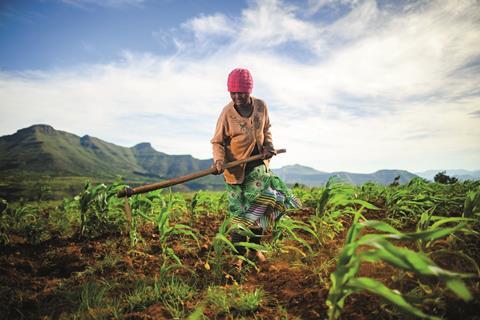
Photo: wilpunt iStock
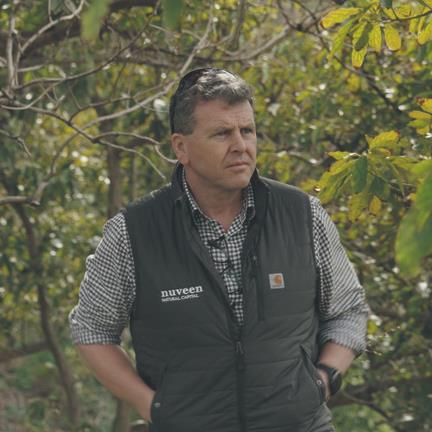
Martin Davies
Martin Davies, global head of natural capital at Nuveen, says Africa has substantial untapped agricultural potential, but unlocking it requires patient capital. Earlier this year, the firm acquired a stake in Signature Agri, an agricultural investment business with 15 years’ experience in investing across the African continent, which Nuveen now owns alongside Old Mutual and the founders.
Davies says investment is needed not only in farmland and primary production but also in irrigation, storage, cold-chain facilities and processing infrastructure. In October, the Islamic Development Bank and the International Fund for Agricultural Development (IFAD) agreed to mobilise up to $750m (€667m) in co-financing to drive sustainable agricultural development. Together, they plan to scale up investments to transform African rural economies, eradicate poverty and strengthen food security.
However, foreign ownership of agricultural land remains politically sensitive. In many African countries, investors operate through long-term government leases rather than freehold ownership.
Davies believes transparency and engagement with local communities are essential to ensuring foreign investment is secured. For investors, the challenge is to generate commercial returns while helping countries improve domestic food security. Agricultural exports can also provide valuable foreign currency earnings.
309m
Number of Africans who faced hunger in 2025, representing one in five people on the continent
$750m
Investment by the Islamic Development Bank and IFAD to drive sustainable agricultural development
Does tech point the way?
Geographical and crop diversification are now a central part of agricultural investment strategy. Nuveen, for instance, manages a global agricultural portfolio spanning approximately 2.2m acres across 14 countries growing 65 different crops. The manager seeks locations with comparative advantages in climate, soil and water availability, while increasingly deploying technology to manage production risks. “If you can be far more efficient, targeted in your input use, reduce your use of synthetic inputs, reduce your use of water, that has to be an integral part of your approach to managing the assets,” says Davies.
In Chile, for example, Nuveen uses AI weather models to determine when rain covers should be placed over cherry orchards ahead of harvest. The covers protect fruit from rainfall but also change the orchard’s microclimate, making accurate timing important.
Agricultural technology is attracting specialist investment as producers seek alternatives to conventional fertilisers and ways of reducing water consumption. In response to investor demand, Capagro plans to raise a third fund in 2027-28, targeting €250m to €300m in the coming months.
Boer says technologies once regarded as experimental are becoming mainstream. Biostimulants, including products derived from seaweed, are increasingly being used in broadacre crops such as soybeans and maize. Precision spraying, improved monitoring and smart irrigation are helping farmers reduce the quantities of fertilisers, chemicals and water required.
Capagro’s portfolio provides examples of the technologies attracting capital. It has invested in Plymag, a developer of algae-based biostimulants, and Ecorobotix, which develops ultra-precision spraying technology aimed at reducing chemical use in agriculture.
New crop genetics, including more drought-resistant and water-efficient varieties, offer further opportunities, while biological pesticides are approaching wider commercial adoption. These technologies cannot entirely replace conventional fertilisers, Boer cautions, but they can reduce dependence on synthetic inputs.
Financing constraints
A major obstacle, however, is financing their adoption Successive years of drought and disappointing harvests have left many European farmers financially stretched, Boer observes. Even where technologies have demonstrated their value, producers may lack the capital to invest in them. “There is very little incentive or money available to invest in new technology, even if they understand that it actually can help,” he says.
For the agriculture sector, the increasingly volatile environment reinforces the importance of geographical diversification, stronger balance sheets and investment in technologies that mitigate risks and improve productivity.
It also underscores the need for patient institutional capital to help family farming operations expand and invest in new production methods when access to finance might otherwise constrain their growth. “Certainly, for family farming operations, there’s a lot of desire to remain involved in agriculture, and they want to see their success grow. But one of the restricting factors they have is that ability to access capital,” says King.
Unlike a single-family farm, exposed to climatic conditions in one region, institutional portfolios can spread risks across different locations, crop types and production systems. Institutional investors also have the financial capacity to withstand difficult growing seasons and fund improvements whose benefits may take years to materialise.
Partnerships with family farming businesses can bring employment, technology and greater resilience to rural communities, King adds.
However, even with institutional capital starting to underwrite agricultural production, Boer sees a “very difficult time ahead” for the sector. “We took everything for granted but no longer can. The weather Europe has experienced over the past two years may be the new normal, and we must prepare for it,” he says. “The conflict in the Middle East that could get resolved is a political issue, but nature is harder to deal with.”
Related Companies
- Previous
- Next

Special report: Deglobalisation

Geopolitics, supply-chain reshoring, energy security concerns and rising protectionism are reshaping how investors approach global real assets
- 1
- 2
- 3
- 4
 Currently
reading
The Iran energy crisis and global food security
- 6