
Real estate professionals need to be ready for the big data challenge, according to new research from the Royal Institution of Chartered Surveyors (RICS).
A new report entitled 'Big data, smart cities, intelligent buildings – surveying in a digital world' looks at the effect the technology trends have had so far on cities, infrastructure and the wider surveying profession, and how the profession and beyond can seize opportunity and mitigate risk.
'The built environment is changing, and the professions needs to change with it,' said Sean Tompkins, RICS CEO. 'New technology is transforming the way people interact with cities and we need to make sure our professional qualifications and competences are evolving to keep pace. That’s why we’ve released this insight paper and have convened the World Built Environment Forum Summit in London this April. We realise the world is undergoing transformation and we want the professions in the built environment to be the leaders of it.'
Built Environment Forum Summit
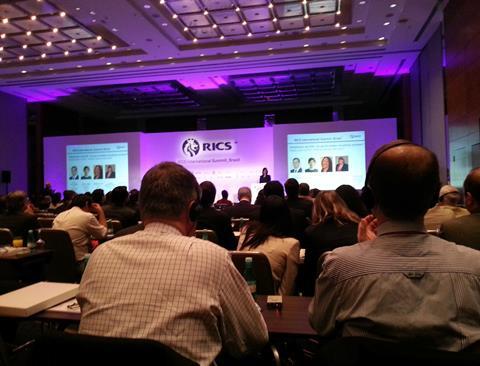
The paper comes just weeks ahead of the RICS World Built Environment Forum Summit taking place on 23-24 April, where leaders from property, the built environment, government, policy, technology and academia will look at how technology is transforming our cities, and the innovative solutions needed to meet the challenges laid out in the paper.
'The summit will bring together a diverse and inclusive mix of C-Suite leaders, opinion formers, policymakers and the next generations to take action on the challenges and opportunities that are shaping our physical world,' added Tompkins. 'While big data represents a technology that delivers many benefits, and offers opportunity it can also bring the risk of professionals becoming marginalised and we need to keep abreast of developments in this field and embrace new skills to remain relevant and help lead in the future.'
Critical data mass
According to the report, making more accurate decisions will be possible through collecting massive amounts of information. But it also cautions against a certain ‘boosterism’ in the ‘big data’ arena where benefits may turn out to be overstated. Professional expertise is still vitally important.
The paper forecasts that, if done at scale, big data could allow cities to become 'sentient', making more efficient use of resources, introducing automated public services, minimising disruption from maintenance and improving public policy decisions by increasing the pool of evidence.
At the largest scales under consideration, it also offers the opportunity for professionals to use data for vast improvements in urban systems such as transport, infrastructure, and urban development. At a smaller scale intelligent buildings are capable of monitoring their own states of repair, allowing preventative maintenance work to be flagged before serious or dangerous problems develop.
Skills crisis
The paper also warns that technological transformation will exacerbate the skills crisis, and could make some roles obsolete.
However, this also brings many new opportunities, giving built environment professionals new career options and qualifications, but will also draw in those in other industries, and with tech specialisms, to pursue entirely new careers in property.
RICS is already using this type of thought leadership in working with professionals to future proof the industry, and as such will introduce new technical competencies for its chartered level professional qualification assessment in 2018.