




US alternative investment manager Harbert Management Corporation is actively assessing several continental European markets as it looks to expand its student housing platform, which currently comprises around 3,000 beds in the UK, according to David King, co-head of European real estate.

King, who was appointed to lead Harbert’s European platform alongside Florent Danset in November last year, said: “We are studying potential opportunities in France, Spain and the Netherlands, while also looking selectively at Italy and Germany. The ultimate ambition is to create a high-quality, diversified portfolio of UK and European assets.”
The firm entered the UK purpose-built student accommodation (PBSA) market in October 2023 with the acquisition of Starwood Capital Group and Round Hill Capital’s £150m (€172.8m) Skyfall portfolio, comprising 1,600 beds. Since then, Harbert has almost doubled the size of its portfolio, and recently acquired Limelight, a PBSA development in Liverpool from Blacklight Capital Partners.
“We thought it sensible to enter the UK as our first move into the European PBSA market, because it is more mature and established and, as such, offers an additional element of safety,” King said.
The student housing market has developed rapidly in recent years, becoming a mainstream investment product in several continental European markets, he added. “Mainland Europe currently offers more upside potential than the UK. It is less institutionalised, and the number of beds available per student is roughly half that seen in the UK, with supply levels extremely low,” he noted.
The potential for rental growth is another major attraction. Rents increased 9% on average across continental Europe last year, according to research published by advisor JLL. However, in the UK, schemes recorded negative to modest positive growth, reflecting slowing demand.
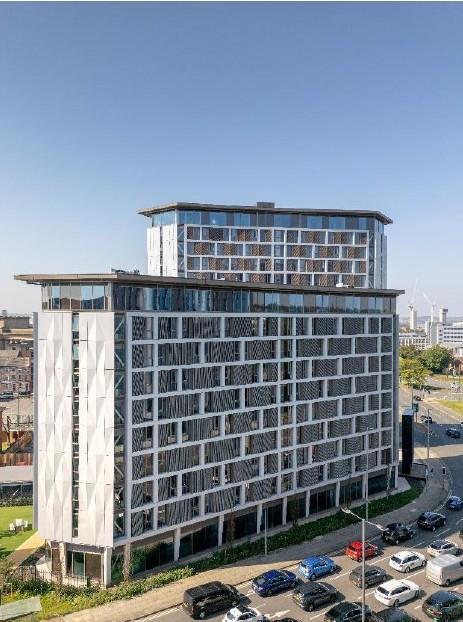
Harbert sees opportunities to invest both in the UK and across Europe due to the student housing’s strong structural tailwinds. “The sector ticks all the boxes,” King said. “Demand is expected to remain strong and resilient, with student numbers forecast to rise both in the UK and on the continent.”
Student housing is also attractive due to its countercyclicality – it tends to outperform when the economy slows and employment becomes harder to secure, he added. “Income is stable and relatively predictable, with rents typically paid upfront and offering a degree of inflation protection. Utility cost increases can be repackaged into new contracts because lease terms are short.”
“The sector also offers higher yields than many traditional property classes and, given its shared amenities, typically has a lower environmental footprint, meaning it also scores well from an ESG perspective.”
Affordability has become a major concern for students amid rising living costs. New developments are reflecting this shift, with an increase in refurbishments and conversions delivering value-for-money schemes. King said: “The proportion of studios has generally fallen, density has increased, and fewer high-cost amenities are being included in planning, partly due to cost considerations.”
With construction and financing costs expected to remain elevated, supply is likely to remain constrained, and King believes the market will stay undersupplied for the foreseeable future. “Very few schemes are financially viable in the sense that projected rents are sufficient to support construction costs, he said. “So, I don’t think deliveries will outweigh demand any time soon.”
To read the latest IPE Real Assets magazine click here.