



Asset class expected to grow strongly, driven by European energy ‘super cycle’. Christopher Walker reports
The year 2025 was a busy and challenging 12 months for the infrastructure sector, but 2026 could prove to be much more important. The industry is at “an inflection point”, according to Paul Ryan, CEO and portfolio manager of the infrastructure investments group at JP Morgan Asset Management.
In a 2026 outlook report, Ryan explains: “Today, the asset class is positioned at a significant turning point. For the first time this century, capital expenditure on infrastructure is expected to exceed depreciation and remain above it for the foreseeable future.” This, he says, marks “the onset of a structural growth phase”, propelled by what can he terms as the three Es: “increasing energy demand, the imperative for energy security, and the ongoing energy transition”.
Ryan puts this structural growth phase in the context of the long-term evolution of the asset class. “Over the past 30 years, infrastructure has emerged as a relatively young asset class within private markets. During this period, investors have steadily deepened their understanding of the risks, regulatory environment and contractual frameworks underpinning the sector. This growing sophistication has fostered market maturity, greater investment flows and a clearer distinction between core and non-core infrastructure assets.”
The upgrading of infrastructure in developed countries reflects decades of underinvestment. Maurice van Sante, senior economist in construction at, ING says: “In the last decade, infrastructure volumes have outpaced global GDP growth, and we expect this trend to continue in many regions in 2026.” Meanwhile, he adds, developing countries in Asia and the Middle East “have shown particularly high growth rates as they catch up and therefore require more high-quality highways, railways, energy facilities, water supplies and land protection”.

M&A could be set to rise – given the reduction in central-bank base rates and stronger fundraising in 2025 – says Charlie Garrood, global head of infrastructure M&A and transaction solutions at Aon. “Secondary transactions, including the use of GP-led continuation vehicles, are expected to further fuel transaction activity. On the supply side, we are likely to see a wave of greenfield investors looking to recycle capital as their projects begin to demonstrate operational track record… investors seeking longer-term yielding assets will be their target buyers.”
Data provider Preqin, now part of global asset manager BlackRock, is betting on strong growth for the asset class. It has projected a 12.9% annualised growth rate starting in 2026, reaching almost $3trn by the end of the decade. Most of that growth will happen in Europe, which Preqin predicts will “act as a key regional driver for this expansion, with a range of relevant industry needs keeping its AUM growth rate higher than other regions”.
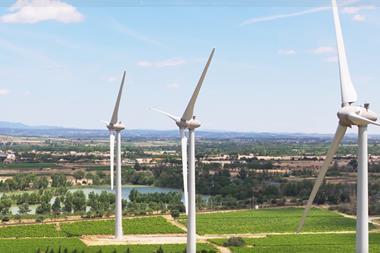
One of the biggest sources of fuel for Europe’s infrastructure growth engine is the combined effects of the energy transition and the need for energy security. In its 2026 report, Federated Hermes says: “Electrification, mainly powered by renewable energy, intersects with the key trends of energy security, data sovereignty and decarbonisation of the economy.”
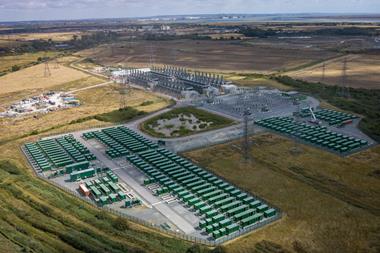
Andreas Ochsenkühn, head of portfolio management and sustainable infrastructure at KGAL Investment Management, says: “The story has become less about if renewables grow and more about how they are integrated. Germany and other core European markets are shifting from expansion at almost any cost to a sharper focus on grid constraints, system stability and industrial competitiveness. Capital will increasingly follow system bottlenecks: grid constraints, flexibility and storage, and the ability to integrate renewables without destabilising power systems.”
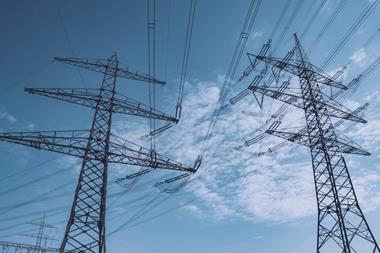
This creates a wealth of opportunities. In Europe, regulated networks are increasing grid investment. Aizhan Meldebek, global infrastructure strategist at Macquarie Asset Management, says: “The utilities sector may be entering a capital expenditure super-cycle, driven by the need for greater transmission and distribution capacity due to rising power demand and generation.”
In the US, investment in transmission and distribution infrastructure is also accelerating, but so is greater reliance on fossil fuels. Charles Cherington, managing partner at Ara Partners, says: “Industrial decarbonisation is entering a more demanding phase. Subsidies and policy driven tailwinds that have supported many low carbon technologies are beginning to recede, and solutions that depend solely on external support to be cost competitive will face increasing pressure.”
Then, of course, there is digitalisation and the impact of the AI revolution. Aaron Mulvihill, global alternatives strategist at JP Morgan Asset Management, says: “As AI adoption transitions from proof-of-concept to widespread, large-scale deployment, investors can use venture capital to back cutting-edge development or infrastructure to support the growing energy demands of data centres.”
Elisabeth Perenick, head of portfolio management, private placements at Wellington Management, says: “We expect infrastructure spending around data centres and digitalisation to remain exceptionally strong into 2026. The scale of AI-driven demand is pushing transactions to sizes we’ve never seen before.”
Investors should also be paying attention to the “rise of sovereign AI”, says Jim Wright, manager of the Premier Miton Global Infrastructure Income Fund. “This is an underestimated driver of new data-centre construction and could compel investors and developers to prioritise Europe, where governments are seeking to secure domestic AI capability.”
Data centres will “continue to reshape electricity demand and digital infrastructure needs in 2026”, Wright says. “The expansion of hyperscale facilities is already feeding through to clear requirements for more transmission and distribution capacity, as well as new generation and storage solutions.”
Best opportunities in private or public markets?
Of course, the macro fundamentals supporting private infrastructure are also driving listed opportunities. “As investors look for stability and upside in an uncertain market, listed infrastructure stands out, benefiting from durable income streams, inflation-linked cash flows and long-term themes,” says Emily Foshag, head of listed infrastructure at Principal Asset Management, believes that. “Valuations haven’t been this attractive in two decades, and most subsectors are positioned for positive earnings growth.”
But the private markets players argue the valuations case is even stronger in their domain. In her 2026 outlook, Meldebek says: “The latest valuation multiples remain beneath historical highs, presenting an appealing entry point to the asset class, particularly when compared to listed equities. Notably, such spreads have only been observed twice before: during the 2008–2009 financial crisis and the COVID-19 pandemic, suggesting that private infrastructure currently represents good value compared to listed equities.”
Macquarie is projecting a healthy 10% return in 2026 from private infrastructure, and an annualised return of 9.4% over the next 10 years. “Earnings growth, supported by exposure to powerful structural drivers, such as electrification and digitalisation” will be the “key contributor to returns in the coming decade”, Meldebek says.
Mulvihill agrees on the primacy of private markets and brings the impact of AI to his argument. He says: “As major hyperscalers… continue to ramp up their spending, the locus of value creation has shifted from public to private markets. This transition is evident as private equity, infrastructure and private credit funds increasingly finance the expansion of data-centre facilities, interconnected networks and the power grids that support them.”

Ongoing talk of an AI bubble actually makes this more certain, he adds. “The year 2025 has further underscored the disruptive and unpredictable nature of AI”, he says. This started, of course, with ‘DeepSeek shock’ – when the Chinese AI start-up announced it had created an AI platform at a fraction of the cost and hardware of its established Silicon Valley rivals. “[This] brought renewed attention to the risks associated with concentration in public equity markets,” says Mulvihill. “For investors wary of lofty public market valuations, private markets provide an alternative route to gain exposure to the AI theme.”
However, Mulvihill does admit that, “with deal activity slowing and exits becoming more elusive, concerns have emerged that private markets could be entering bubble territory”. Pieter Welman, head of global infrastructure at Barings, is also worried and notes that “some investors are becoming more cautious in their approach to the sector”. He adds: “Given this backdrop, we don’t expect to see material changes to structures or pricing.”
Mulvihill’s counter argument, however, is that “while such apprehensions are understandable, focusing solely on perceived excesses risks overlooks the wider context”. He says: “Private markets are evolving to reflect a ‘new normal’ in corporate finance, with their expanding influence in global investment appearing more structural than cyclical.”
Ryan agrees: “This new era of investment is poised to deliver higher returns, not through increased leverage or heightened risk, but as a result of genuine demand growth and capital scarcity.”
2026 will settle the debate.
To read the latest IPE Real Assets magazine click here.