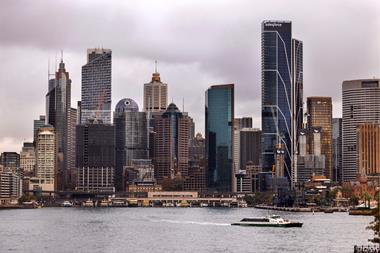


The looming break-up of a A$2.9bn (€1.6bn) shopping-centre portfolio will be the ultimate proof of the strength in the recovery of Australia’s retail real estate sector, which has already seen many strong transactions in recent months.
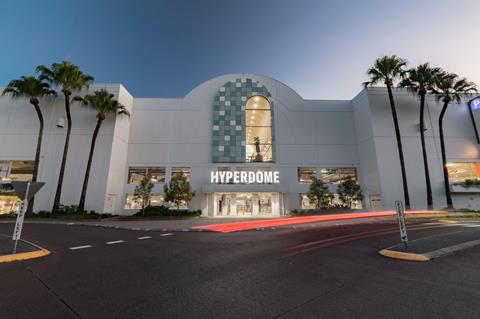
In late November, QIC Real Estate sold the Hyperdome shopping centre to MA Financial Group for A$687m. It is MA Financial’s second significant acquisition in recent months. The manager recently teamed up with Singapore-listed K-REIT to buy Top Ryde Shopping Centre in a northern Sydney suburb from Blackstone for A$525m, taking a 25% stake while K-REIT holds the remaining 75%.
MA Financial has recently expanded its exposure to the sector through the takeover of IP Generation, a manager which had built up a retail portfolio valued at A$2bn.
Offshore capital is circling as well. Hong Kong’s Link REIT has made an offer for Lendlease’s stakes in three major centres held by its Australian Prime Property Fund Retail.
Lendlease is also close to finalising the sale of Erina Fair, a dominant NSW Central Coast mall owned jointly with Korea’s National Pension Scheme, to local manager Fawkner Property. The asset is expected to trade for close to A$900m.
Like MA Financial, Fawkner has been steadily building its retail holdings, acquiring several regional centres over the past two years. Both managers say they are responding to strong investor demand for high-performing retail assets. The market has moved on from convenience-anchored centres to large regional centres catering to discretionary shoppers.
That demand is showing up in the numbers. Retail transaction volumes reached A$7.61bn in the year to October – already 86% of 2024’s total and 45% higher than the same period last year, according to Colliers’ third-quarter snapshot. The average sale price across all retail sub-sectors is now more than 45% above the average of the previous three years.
Julian Biggins, MA Financial joint CEO, said Australian shopping centres remain “one of the most resilient and attractive real estate investment opportunities in today’s market”. He notes that retail spending has increased every year for the past four decades, delivering a compound annual growth rate of around 6%. Over the past 30 years, annual retail spend grew by an average of 5% in Australia, compared with 4.5% in the US and 3.5% in the UK.
With Australia’s population growing at around 1.7% a year, the country is expected to face a shortfall of 1.1m sqm of retail space by 2030, according to JLL. Yet no major greenfield shopping centre is currently under development, constrained by planning restrictions, elevated construction costs and the fact that existing assets are trading at or below replacement cost.
This news briefing was published last week. If you would like to receive it regularly, on your ‘IPE Real Assets profile’, go to ‘My Newsletters‘ and select any from the list.
To read the latest IPE Real Assets magazine click here.