
The Gresham House managing director warns against overlooking sustainable timber amid today’s new wave of natural capital. Interview by Lauren Mills

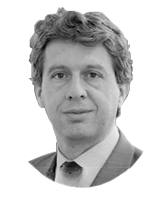
Olly Hughes - Gresham House


Olly Hughes & Gresham House

  • Hughes is responsible for managing the growth and development of Gresham House’s forestry activities including acquisitions, fund and private client management and forestry asset management
  • Prior to joining Gresham House, Hughes was a partner and head of infrastructure at Oxford Capital for six years where he built and managed a portfolio of over £300m of solar and wind renewable energy assets 
  • He started his career at ING Barings in 1995 focusing on asset-backed structuring and since then has focused his career on real asset investment management 

Sustainable forestry investments are becoming “the backbone” of an evolving natural-capital asset class. This is according to Olly Hughes, the forestry managing director at Gresham House, one of the most experienced managers in the industry who has overseen huge changes in the attractiveness of the asset class over recent years.

Gresham House has £3.5bn (€4.2bn) of sustainable forest assets under management and is the ninth-largest natural-capital asset manager globally, the largest commercial forestry manager in the UK, and the seventh-largest in the world (by value), managing over 193,000 hectares of forests. In 2023, it planted 6.4m trees, contributing to an estimated 1.9m tonnes of CO2 sequestration annually.

Hughes says: “I think forestry and agriculture are at the forefront of exposure to climate change. Furthermore, our investor base is changing and transitioning. Five to 10 years ago, the biggest denomination of investors were private clients and high-net-worth investors.

“Now we’re managing the majority of our funds on behalf of institutional clients, on behalf of UK local authority pension funds, UK corporate pension funds, insurance companies, endowments and charities. The more traditional institutional market.” 

In June this year, South Yorkshire Pensions Authority invested £50m in the Gresham House Forest Fund VI, which aims to generate an 8% internal rate of return through the harvesting and sale of sustainable timber. The fund had previously attracted fellow local government pension scheme Worcestershire Pension Fund and had raised £150m since its launch in March 2022. 

Hughes says further capital raisings are planned, “with institutional investors increasingly recognising the ability of forestry investments to provide compelling financial returns while delivering a positive impact in terms of emissions, biodiversity and job creation in rural communities”. He expects Fund VI to close in the first quarter of 2025.

Historically, the institutional investment market for forestry was dominated by the US and North America. “What we have done at Gresham House is create an institutional-quality and scale platform for people to acquire and invest in assets in the UK and Europe which wasn’t there before. And we’ve done that by creating a model that aggregates assets,” Hughes says. 

This transition has taken many years. In Ireland, where the market is highly fragmented, Gresham House works with the country’s sovereign forestry manager and deals with average land sizes of around 15,000 hectares. To put that into perspective, in Australia, the manager recently acquired a portfolio of assets on behalf of AXA, comprising 26,000 hectares for one forest.

Brycheiniog forest in mid-Wales

Brycheiniog forest in mid-Wales, containing around 200,000 cubic metres of timber across a diverse range of species

Among its investments is Brycheiniog forest in mid-Wales, containing around 200,000 cubic metres of timber across a diverse range of species. Hughes says the forest represents a “significant store of value” to investors.

The forest supports biodiversity, providing nature corridors for species in a landscape with fragmented woodland cover. After harvesting, a greater diversity of species will be replanted, contributing positively to the forest’s biodiversity and visual impact.

Advances in technology, such as environmental DNA sampling, will improve quantifications and management of forest biodiversity, according to Hughes. The ability to provide performance data is key to unlocking the billions of dollars needed to tackle climate change, with sustainable forestry and agriculture playing no small part in the global ambition to keep global temperature rises to no more than 1.5 degrees Celsius above pre-industrial levels. 

Gresham House is part of the International Sustainable Forestry Coalition (ISFC) which was set up to ensure that the importance of sustainable forestry is heard at events such as the recent COP16 biodiversity conference in Colombia and the COP29 climate change conference in Azerbaijan. The ISFC wants to provide “effective international leadership” to support the role of sustainable forest management in the climate transition. 

“This isn’t a new asset class,” Hughes says. “What we are experiencing is an evolution and a development”. Sustainable forestry “remains a compelling investment” and plays “a central role in a natural capital allocation underpinning many of the investible natural capital themes”.

The ISFC initiative aimed to have an “active presence” at COP29 Baku, focusing on topics including biodiversity measurement, international methodologies for carbon accreditation and the conservation of ecosystems. 

Hughes says that while there are exciting opportunities in the “more nascent areas of carbon credits and biodiversity”, investors should “tread with caution” and ensure that “the risks are balanced with more established markets such as sustainable timber”.

While Hughes says he believes the ISFC “creates a voice for our sector” within the COP process, he is pragmatic about the need to establish globally recognised KPIs [key performance indicators] to calm the nerves of cautious institutional investors.

“This isn’t a new asset class. What we are experiencing is an evolution and a development”

“The question is how to securitise biodiversity value, and that still needs a huge amount of evolution. What is really needed is the formation of an agreed regulation and agreed standard that everybody can accept.

“[We] need a standardisation of the value of natural capital, because if you’re asking for investment from fiscally incentivised investors, such as pension funds, they need to be investing in something that delivers an outcome,” says Hughes.

He is an advocate of the introduction of “a structural quantification of” and “an accounting standard for those particular drivers”.

Given the lack of global consensus around the Greenhouse Gas Protocol, Hughes says there is still uncertainty, “certainly from the forestry industry”, as to “how that gets accounted for and accommodated”.

He adds: “It’s complicated, but there is a significant appetite, I would say, and a significant ambition from a lot of the institutional investor base, to work out how to allocate into this sector.”

Gresham House has a proven track record of attracting institutional investors. “We are looking to deliver a core return from timber while ensuring we are doing it in the most sustainable manner,” says Hughes. “On the forestry side of things, we deliver core rates of return of around 8%, and then we’re looking to deliver upside on that from natural capital additional value drivers within the biodiversity side of things.” 

Gresham House believes that a forest with greater biodiversity will be worth more than a forest that has less biodiversity. “This is one of the fundamental equations that we’re working on. Now what we want to do is to work out how we measure that, and the challenge is that there are many, many ways of measuring diversity, such as abundance, species mix, and all of these things are quite academic measurements.” 

Hughes is under no illusion that collecting the required data is a massive task involving an enormous amount of fieldwork and assessment. However, he is confident that these issues can be overcome: “There are a lot of very clever data systems that are now evolving, utilising satellite data, over-layering maps and geological and geographical data, which are then assimilating a biodiversity figure. 

“So this is evolving, and it’s all evolving rapidly, but we’ve got to find that balance between delivering biodiversity, being able to measure that diversity and then you can monitor it. Once you can monitor it, you can enhance it. Once you can enhance it, you can value it.”

This would be a major achievement for natural capital as an asset class. While Hughes and his team already deliver steady returns from forestry for patient capital, an agreed performance standard would go a long way to enticing even more institutional investors into the asset class.